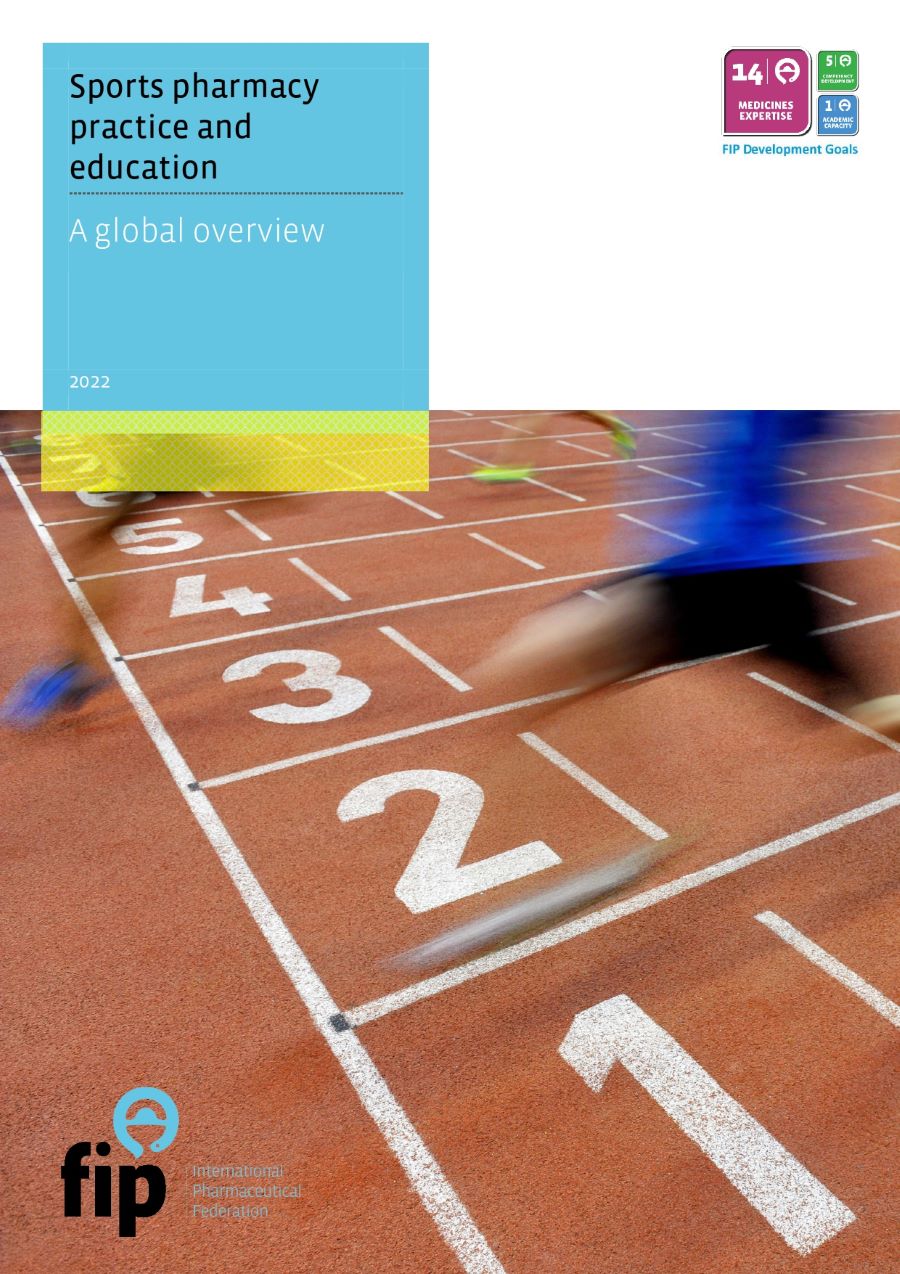
Inspired by the athletes themselves, their athleticism, and the spirit of competitive sport, pharmacists have
become key players as athlete support personnel (ASP). As ASP, pharmacists support appropriate medication
selection and provision of medicines management in the healthcare of athletes and pharmacy operations of
sporting events. Increasingly recognised within the world of sports as a valuable expertise, the practice is
known as “sports pharmacy”. The specialty of sports pharmacy is no longer a niche area but is one gaining
traction as a recognised specialty on a global scale. Sports pharmacists advocate the health of recreational or
competitive athletes in many settings and have been integral to the anti-doping movement. Pharmacists, as
the most accessible healthcare provider, and often a first point of contact in the self-care continuum, have a
unique and important role in providing accurate medicines-related information to athletes and the athlete
support team to avoid inadvertent doping and adverse drug events, and support and review appropriate
prescribing where applicable. This requires awareness of sports science, anti-doping rules and regulations,
and physiopharmacology. Initial training through undergraduate studies and advanced training through
continuing professional development in these areas facilitate pharmacist competency to function as ASP.

Sports pharmacy practice and education: A global overview
Page: Self Care
Self-care: Reclassification of medicines and its impact on access
The role of pharmacists in managing reflux-like symptoms: Report from an international insight board
The role of pharmacists in promoting female intimate wellness: Report from an international insight board
Managing reflux symptoms in the community pharmacy: Quick reference guide for pharmacists
This publication provides a quick review of guidance on reflux management by community pharmacists, expanding on the previous FIP publication “Empowering self-care: A handbook for pharmacists”. An overview of the causes, symptoms and management options for reflux management will be detailed, including resources and highlighted information for the pharmacy team.
The role of pharmacists in closing the gender pain gap: Report from an international insight board
This report outlines the insights, potential lessons learned and ideas for ways forward for the pharmacy profession
regarding the gender pain gap. The issues were discussed at the FIP insight board on the gender pain gap organised at
the FIP Congress 2022 in Seville, Spain.
The insight board collected views from experts on the following topics:
• Pharmacists’ awareness of gender inequalities in pain research;
• Pharmacists’ awareness of gender gaps in treatment offers for pain management;
• Pharmacists and unconscious bias towards women in pain management;
• Knowledge, attitudes and practices that pharmacists have to close the gender pain gap; and
• How pharmacists can be supported with, for example, training, tools to address gender inequalities in pain
management, closing the gender pain gap and achieving behavioural change towards women.
The participants considered various issues and questions during the meeting:
• Identifying pain symptoms and the influence of gender in pain management;
• Pharmacists’ knowledge and training status on unconscious bias towards women in pain management;
• Knowledge, attitudes and practices that pharmacists have and can develop further to close the gender pain
gap; and
• How to support pharmacists to address gender inequalities in acute pain management, close the gender
pain gap and change approaches towards pain in women.
The literature was evaluated beforehand and key available research findings were extrapolated. Then, discussions were
focused on the areas above, recorded and reported in this document. Insights from the participants and any quotes
published in this report remain anonymous and non-attributable.
What community pharmacy teams need to support good hygiene as part of people’s self-care
Self-care is often thought of as what people do for themselves to establish and maintain health, and to prevent and deal
with illness. According to the World Health Organization, it is a broad concept encompassing nutrition (type and quality
of food eaten), lifestyle (sporting activities, leisure etc), environmental factors (living conditions, social habits etc),
socioeconomic factors (income level, cultural beliefs etc), self-medication and hygiene (general and personal).
This study, which took the form of an online questionnaire, aimed to describe community pharmacy insights into
hygiene and pharmacy teams’ role in addressing germ concerns of the public across India, Indonesia, Saudi Arabia, South
Africa and Thailand. The findings from our literature review showed that the concept of providing hygiene care advice has been differently shaped pre- and post-COVID times. Before the COVID-19 pandemic, the area of focus was limited to oral hygiene. All
studies reviewed in the literature reinforced the vital role of community pharmacists as the public’s first choice of
healthcare provider in mitigating the spread of the disease as well as their prominent contribution to overall emergency
management. There was also an unequivocal need to support, train and educate community pharmacists and their
teams to improve their knowledge because the concept of increasing personal hygiene awareness is a focus area of
community pharmacists in developed and developing countries.
Videos: Recognising and managing chronic bronchitis in the community
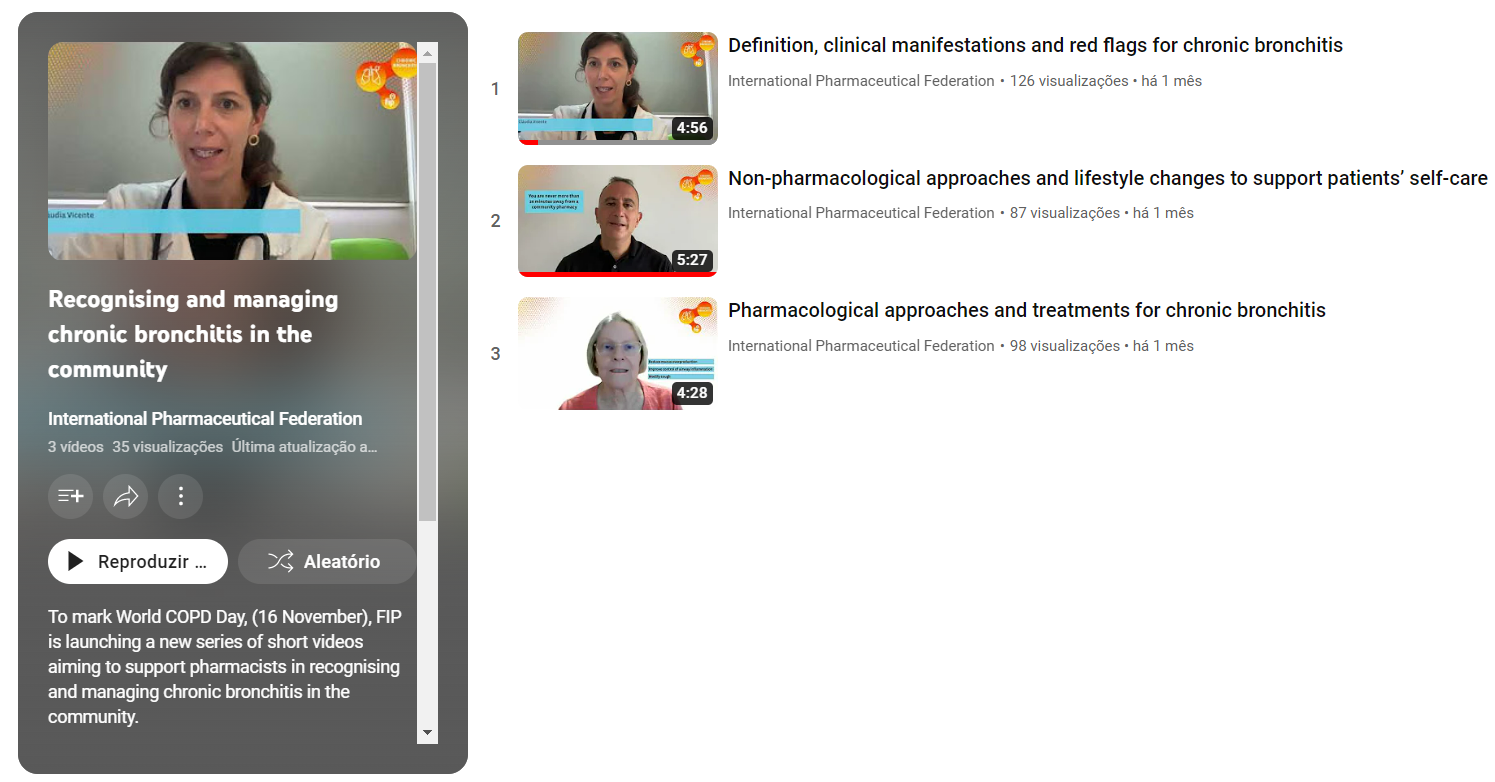
To mark World COPD Day, (16 November), FIP is launching a new series of short videos aiming to support pharmacists in recognising and managing chronic bronchitis in the community. Chronic bronchitis is included under the umbrella term COPD (chronic obstructive pulmonary disease), and has numerous clinical consequences, such as predisposition to lower respiratory tract infections, accelerated decline in lung function, and decreased health-related quality of life. Chronic bronchitis can be common and can go unrecognised and undiagnosed at the early stages. Identification, advice, management and referral are all ways in which pharmacists can play a role.
Videos: Sore throat management in the community
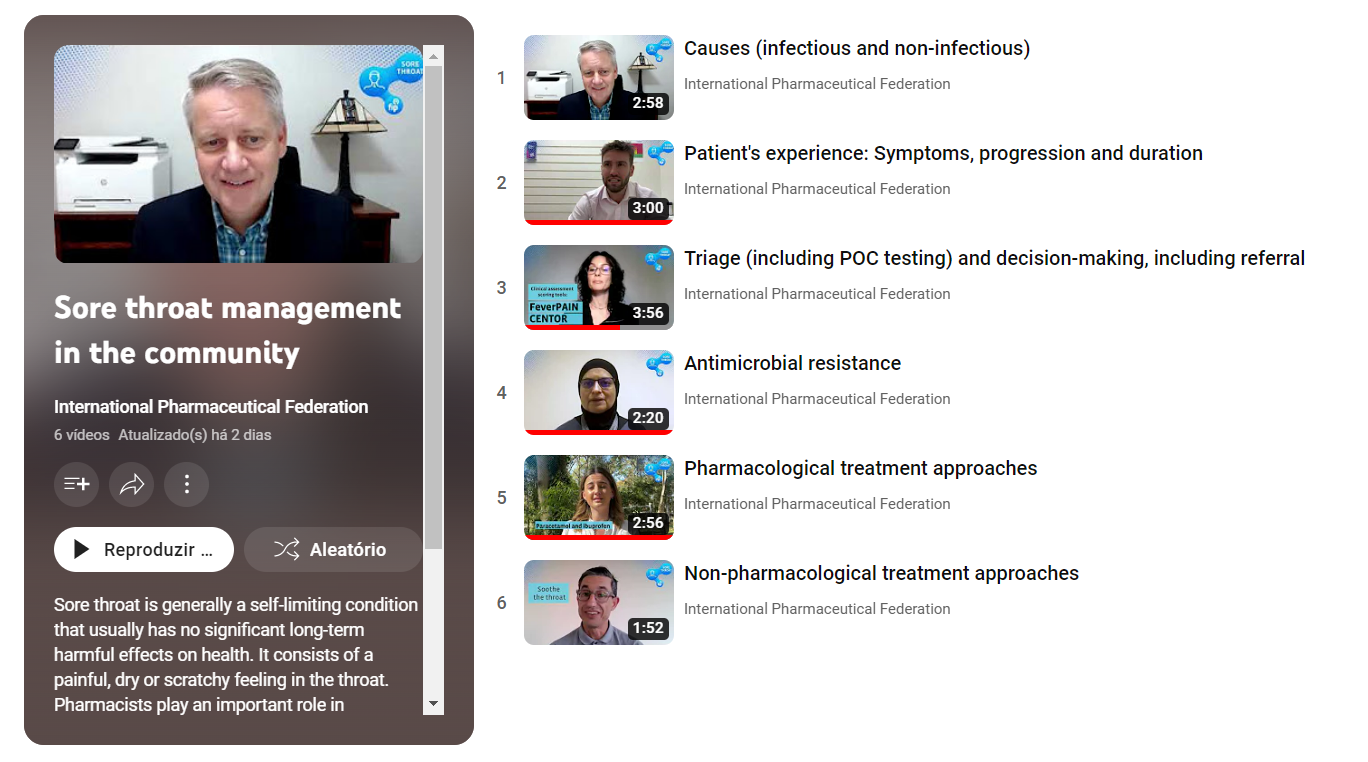
Sore throat is generally a self-limiting condition that usually has no significant long-term harmful effects on health. It consists of a painful, dry or scratchy feeling in the throat. Pharmacists play an important role in supporting self-care in cases of sore throat and can thus avoid patients’ unnecessary use of other healthcare resources and the unwarranted use of antimicrobials. This series includes six videos on different aspects of sore throat management, from causes and symptoms, to triage and pharmacological and non-pharmacological treatment options
Sore throat: Quick reference guide for pharmacists
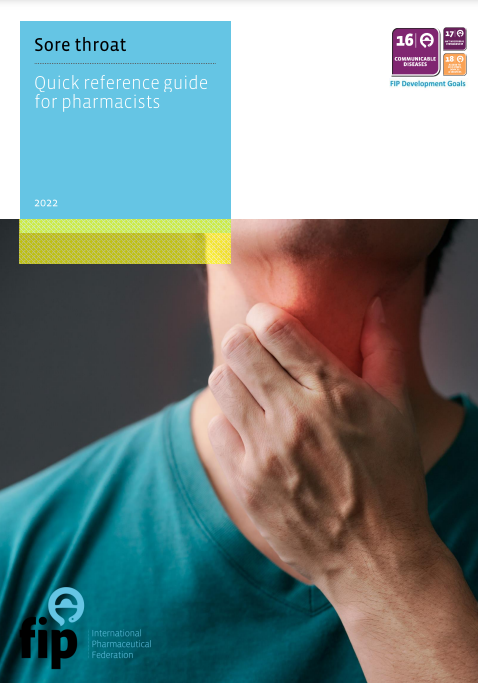
Sore throat is one of the most common upper respiratory tract infections for which antibiotics are used inappropriately. This quick reference guide covers causes, triage, and pharmacological and non-pharmacological treatments, and it provides links to further resources.
