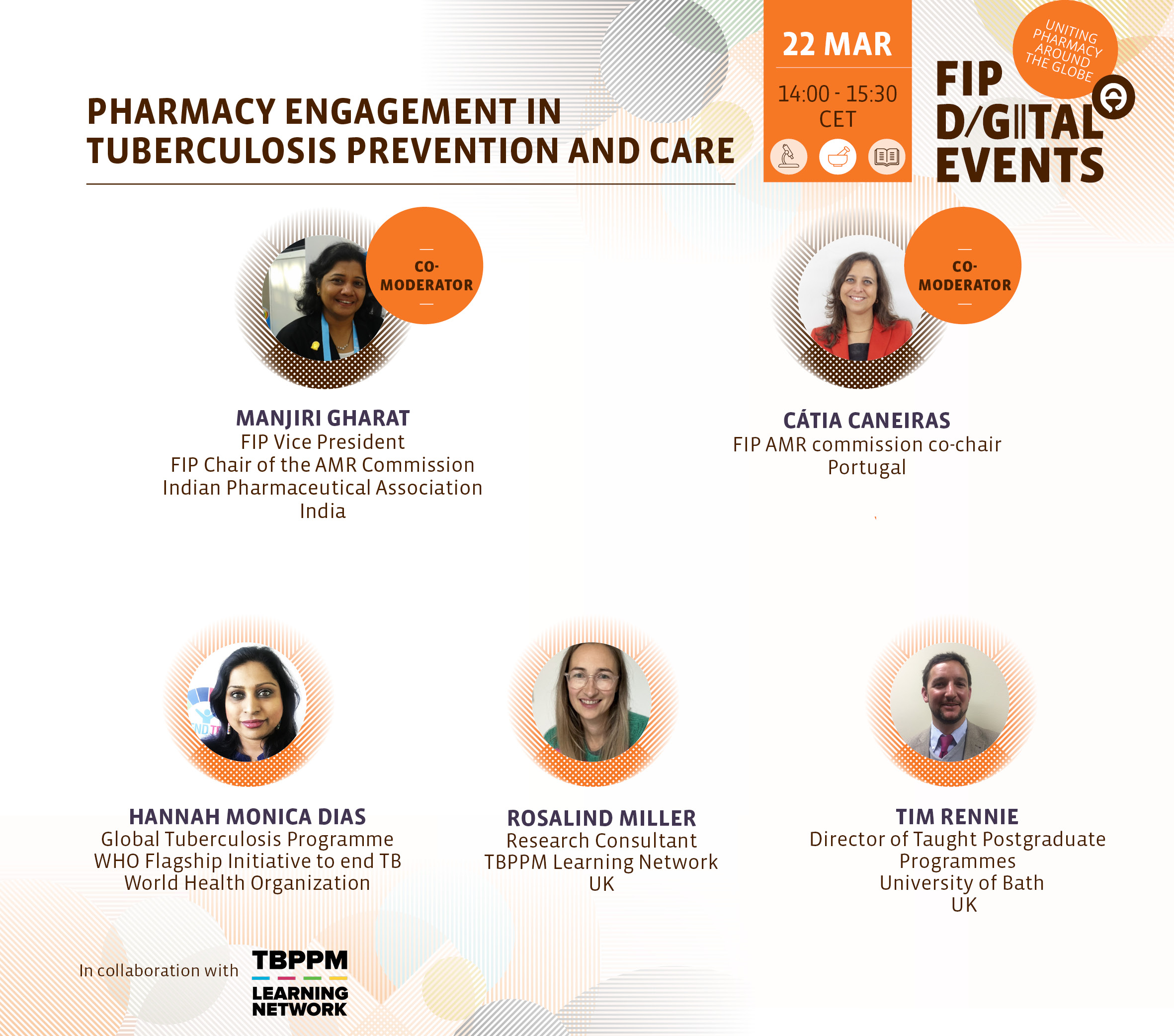
Tuberculosis (TB) is a preventable and curable disease. However, according to the WHO, in 2022, it affected 10.6 million people worldwide and caused 1.3 million deaths. TB occurs in all countries and in people of all ages. Multi-drug resistant TB (MDR-TB) remains a public health crisis and a threat to health security, with only about two in five people receiving treatment in 2022. In this digital event, experts will explore the role that pharmacists play in the fight against TB, and how this role can be further leveraged. This event marks World TB Day and aims to strengthen pharmacy engagement, foster collaboration and contribute to a TB-free world through collective expertise and commitment.

Pharmacy engagement in tuberculosis prevention and care
Page: Self Care
CPD bites: A day in the life of a pharmacist supporting patients to self-manage common ailments (2023)
This series will deliver six episodes of CPD bites presenting experiences and views of six pharmacists, from six different countries/regions discussing pharmacists’ role and experience in supporting patients’ self-care/self-manage commonly experienced ailments such as common cold, sore throat, flu, reflux, skin infections, or urinary tract infections. The series will cover the importance of customer satisfaction; patient reassurance; patient loyalty; diagnostic service provision; patient empathy; counter staff training; patient triage; and interactions with physicians in self-care
Identifying pharmacy-led actions for improving health literacy: Report from an international advisory roundtable (2023)
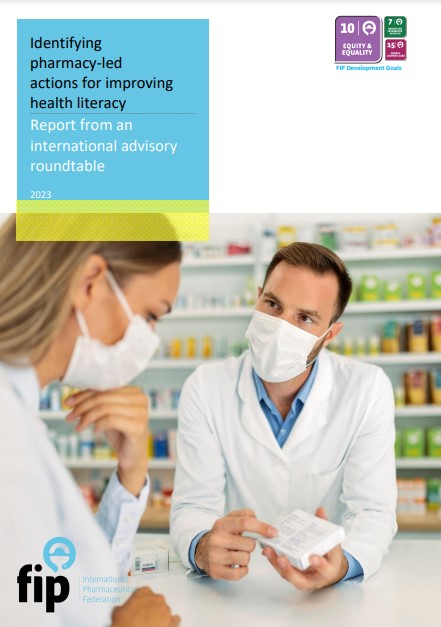
Of FIP’s 21 Development Goals, FIP DG 10 (Equity and equality) impacts us all. It calls for clear strategies to address inequalities in the pharmaceutical workforce, as well as to widen access and equity of pharmaceutical care services and access, and equity in global capacity in pharmaceutical sciences development. Health literacy is one of the key factors for achieving health equity and equality, and it is universally acknowledged that low health literacy is a barrier to better health and to achieving inclusivity and equity in health. The COVID-19 pandemic has exacerbated and deepened existing health inequities and has also revealed that a large part of them is rooted in education and literacy levels.
Health inclusivity, agency and empowerment: Developing solutions to help pharmacists drive better health outcomes: Report from an international insight board (2023)

The United Nations Sustainable Development Goal 3 (Good health and well-being) seeks to “ensure healthy lives and promote well-being for all at all ages”. Achieving this goal and universal health coverage cannot be achieved without equitable and inclusive access to health care, in our case, pharmaceutical care.
A symposium with the theme “Health inclusivity and the role of pharmacy” took place during FIP’s 80th World Congress of Pharmacy and Pharmaceutical Sciences in Seville, Spain, in 2022. Equitable and inclusive access to health care is necessary if universal health coverage SDG3 are to be achieved. With the belief that pharmacists can meaningfully influence and improve health outcomes through inclusivity and inclusion, expert speakers from The Economist, leading pharmacists and academics discussed how pharmacy can play a leading role in driving health inclusivity
Enabling people-centred personalised care on pain in pharmacy: Report from an international roundtable (2023)
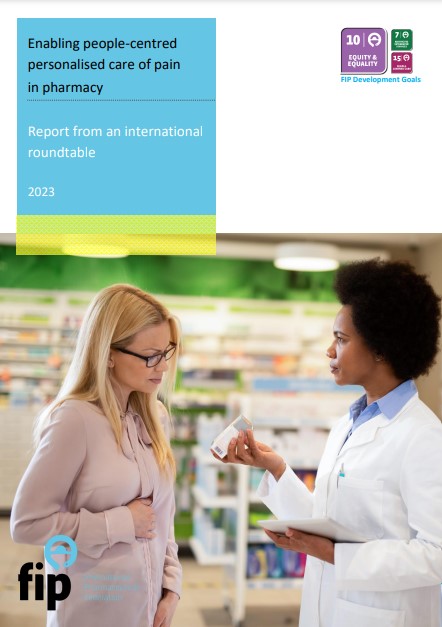
Delivering people-centred care is at the heart of pharmacy practice. FIP Development Goal 15 (People-centred care) emphasises the need to be able to deliver pharmaceutical care services for the prevention, screening, clinical management and therapeutic optimisation of non-communicable diseases (NCDs) and long-term conditions (LTCs). Pain management, in particular, is a critical area where pharmacists play a significant role, as highlighted in the FIP 2022 report entitled “Empowering self-care: A handbook for pharmacists”. However, despite the high incidence of pain, patients are often hesitant to discuss it. It is necessary to comprehend the reasons behind this reluctance and establish comprehensive communication between pharmacists and patients, leading to personalised pain management and improved clinical outcomes and self-care.
Empoderar el autocuidado: Un manual para farmacéuticos
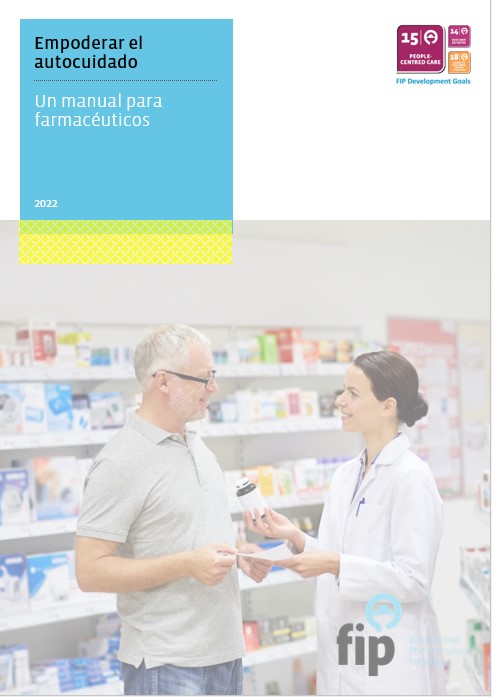
Apoyar y facultar a las personas para que participen responsablemente en el autocuidado es una parte importante de la práctica diaria de los farmacéuticos en todo el mundo. El autocuidado abarca todo el espectro del bienestar desde la prevención de enfermedades hasta la gestión de síntomas y dolencias comunes. También abarca intervenciones, que van desde el asesoramiento sobre medicamentos sin receta y dispositivos médicos (a menudo descritos como “de venta libre”) hasta la educación sobre dietas saludables, higiene y prácticas de atención plena.1 La capacidad de participar en el autocuidado faculta a las personas para actuar sobre su propia salud y bienestar y fomenta la inclusión de sus aportes y necesidades específicas, al tomar decisiones del cuidado de la salud. El autocuidado faculta a las personas y las sociedades para transformar la salud. Además, para promover la equidad en materia de salud, se necesita alfabetización sanitaria y existe un considerable margen de mejora y de mayor investigación en este campo.
mHealth: Use of mobile health technologies in pharmacy practice
In a world of constant technological advances, it is important that healthcare professionals make use of technology to
support patients and provide health care to ensure an optimal quality of life. Mobile health (mHealth) uses mobile
technologies to assist healthcare professionals in providing efficient and adequate patient care. Mobile applications
play an important role in mHealth, as they allow users to access information quickly, at the touch of a finger. This report
discusses how mHealth assists pharmacists in providing patients with the best care possible.
Through the use of mobile applications, pharmacists can stay up to date with disease state guidelines, maintain
adequate pharmacy stock inventories, access drug information systems, review patient health information and use tools
to calculate individual drug doses and to accurately convert between units of measurement. Mobile devices may also
assist pharmacists by converting smart phones into point-of-care diagnostic tools, such as otoscopes or blood pressure
monitors. Mobile applications can also help patients manage disease states, improving their medication adherence, and
logging important health history. mHealth mobile applications have the ability to support pharmacy practice, as well as
patients’ lives.
Although mHealth is constantly advancing in global health care, patient confidentiality risks, variable IT literacy and
internet access requirements are barriers that stand between patients/healthcare providers and the ability to fully take
advantage of mHealth technologies. The goal of mHealth in the field of pharmacy should be to support and assist
individuals in providing safe, effective and efficient patient-centred care.
Mitigating the impact of air pollution on health: The role of community pharmacists – Global survey report
In 2019, the World Health Organization (WHO) listed air pollution and climate change as one of the top 10
threats to global health. According to the WHO, air pollution is the greatest environmental risk to health, with
nine out of 10 people breathing polluted air every day.
Between May and June 2020, FIP conducted the first-ever survey on “Air pollution and respiratory health:
Awareness and roles of community pharmacists”. Responses were received from 62 countries and territories.
FIP conducted this survey with the aims of better understanding pharmacists’ awareness of the impact of air
pollution on respiratory health, their current role in respiratory care, and what are the main barriers and
drivers for them to fully realise this role, such as gaps in knowledge, tools and other resources, including the
availability of guidelines. The data and intelligence emerging from this survey may inform policymaking,
advocacy efforts and new service development by pharmacist organisations around the world.
The global threat of air pollution and its impact on patient care: Supporting pharmacy practice and workforce development
This reports the outcomes of a roundtable organized by The Clean Breathing Institute & International Pharmaceutical Federation (FIP).
Online pharmacy operations and distribution of medicines. Global Survey Report FIP Community Pharmacy Section
The aim of the study was to provide a global snapshot of online pharmacy operations and the distribution of medicines
on the internet; determine how online pharmacy operations may impact patient safety; and determine the impact of
online pharmacy sales (actual or perceived) on brick-and-mortar pharmacies.
