
This webinar will present selected findings from a recent FIP survey on the regulation of the distribution of medicines and pharmacists’ role in supporting responsible self-care. It will also focus on the role of pharmacies in relation to the use of generics, as well as alternative and complementary medicines.

Distribution of medicines and promotion of responsible self-care: Channels, changes and challenges
Page: Self Care
Supporting self-care: musculoskeletal pain and chronicity
The aim of this event was to identify how the community pharmacy team can support self-care for people with musculoskeletal pain
Readying the global population for self-care: Health literacy in the 2020s
This event will explore the evolution in our understanding of health literacy and identify practical strategies to improve health literacy in community populations. The role of the pharmacist in health literacy is also discussed.
Health literacy describes the skills that enable individuals to obtain, understand and use information to make decisions and take actions that have an impact on health. Several countries now have well established national strategies and plans to improve health literacy through programs to improve the skills of patients and the public, and service changes to reduce the literacy demands on patients and the public.
Supporting self-care: Footcare in diabetes management
Diabetic foot is a devasting complication of diabetes that can lead to loss of a limb and life. It has a complex pathology characterised by neuropathy, ischaemia and slow healing. Often the resulting loss in feeling leaves patients unable to sense the damage to their feet. 451 Million suffer with diabetes worldwide, 1 in 10 will get a foot ulcer, 80% go to have an amputation, 8 out of 10 amputations can be prevented by intervention.
Selfcare in the digital age
This event will explore latest developments in digital health that supports self-care. It will identify practical strategies to appraise latest technology and manage misinformation and the ‘infodemic’. Current practice and role of the pharmacist in digital health is also discussed.
Pharmacy a gateway to care: policy statement (2017)
This statement underscores the importance and benefits of self care. It recognises both the personal responsibility of patients to enhance and maintain their own health and well-being, and the responsibility of pharmacists to support patients in self care activities. Appropriate support by pharmacists will assist patients in improved or maintained health, greater health self-efficacy, and higher economic efficiency.
Pharmacy as a gateway to care: Helping people towards better health (2017)
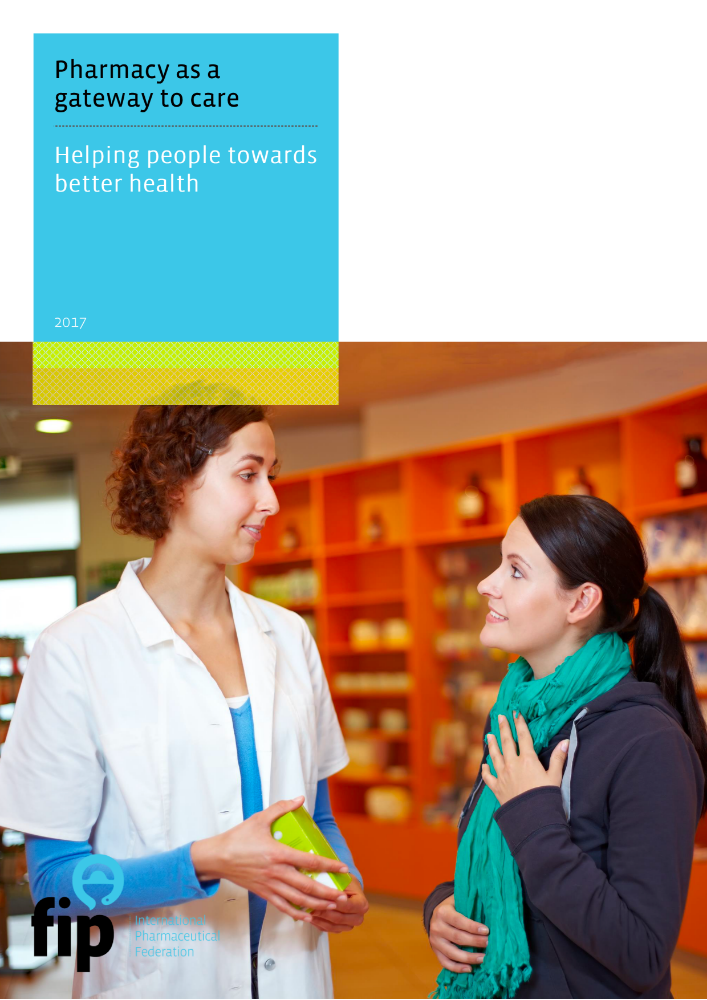
This reference paper reviews the current state of consumer interest in health care and presents a collection of evidence of pharmacy services related to self-care and the value that pharmacists bring to health care systems in this way. It lays out the drivers of self-care and profound changes in the way health care systems operate.
Pharmacists supporting women and responsible use of medicines: Empowering informal care givers (2018)
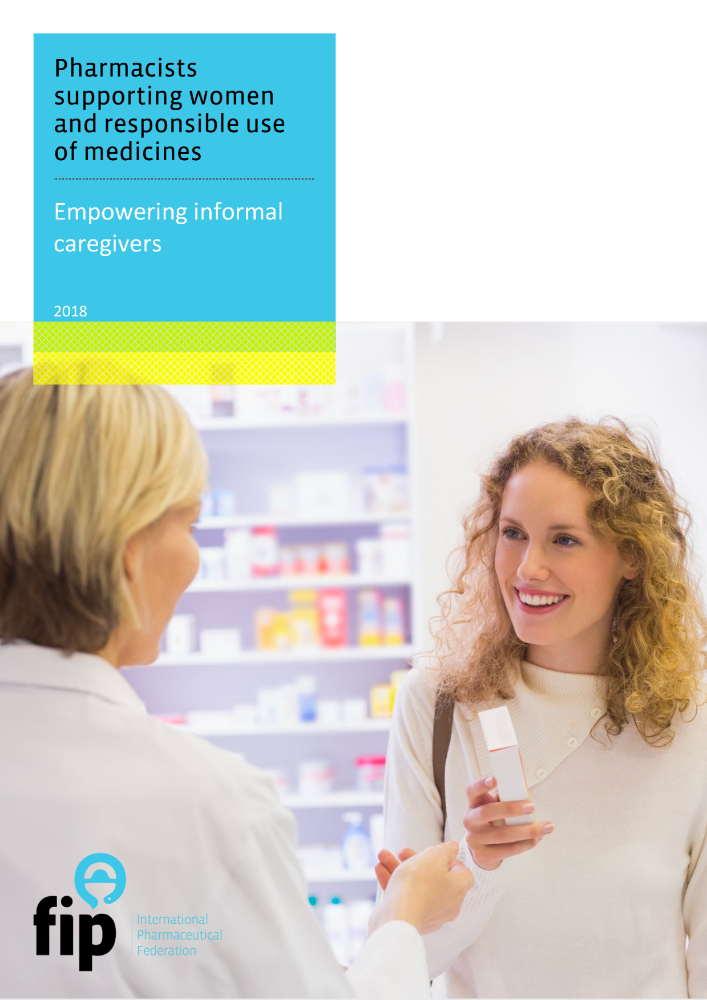
Women are the non-professional caregivers closest to healthcare professionals and are often the ones who visit pharmacies and assume responsibilities for health in the household. In general, women tend to seek treatment and visit doctors or pharmacies (and pharmacists) more frequently than men do. It is often the woman who encourages family members to visit a healthcare professional and who makes sure they take medicines and understand the treatment.
Pharmacists should support women in these emerging roles, because medicines are like a double-edged sword — of great benefit if used correctly, but capable of causing harm if used incorrectly. In this reference document, attention is paid to the fact that women as informal caregivers considerably lighten the load of the healthcare labour force, often playing a crucial and underappreciated role in providing healthcare to families and communities.
Joint Statement of Policy by the International Pharmaceutical Federation (FIP) and the Global Self-Care Federation (GSCF) on Responsible and Effective Self-care (2021)
The objective of this statement is to describe the united role and intention of the pharmacy profession and industry in delivering solutions to people to facilitate self-care and in engaging with stakeholders including governments to further develop self-care as a core pillar of sustainable healthcare systems. This statement considers regulated or evidence-based selfcare products designed to promote good health, or to prevent and/or to treat ill health through self-care, and to achieve positive outcomes for people’s health. In this context, pharmacists play a key role when assisting individuals as they can provide unbiased, evidence based advice and information about regulated or evidence-based self-care products and services available.
Nutrition and weight management services: A toolkit for pharmacists (2021)
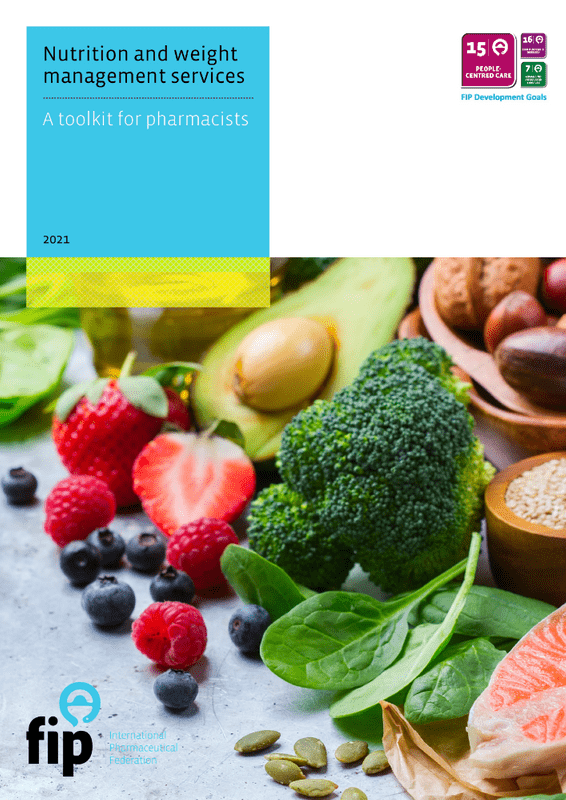
The aim of this toolkit is to equip pharmacists with knowledge in general nutrition and general weight management strategies so they can play an increased role in the communities they serve and support other healthcare providers involved in their patients’ care, including general and specialist physicians, nurses, dieticians, nutritionists, dentists etc., and to be proactive in facilitating discussions about nutrition and physical activity with their patients. Pharmacists across the world are already taking steps to promote healthy lifestyles among their patients through a variety of innovative initiatives, ranging from educational campaigns to more direct patient counselling strategies and programmes.
