This event discusses how targeted switching of prescription only medicines to non-prescription medicines (Over The Counter medicines) can contribute to self-care of a nation’s population. Availability of diagnostics in the pharmacy and beyond can also make an impact on self-care.

Innovation in self-care models, shaping the future together.
Page: Self Care
Supporting self-care: children’s health
Pharmacy teams are increasingly supporting children and their carers with self-care. This webinar will focus particularly on appropriate management of choices of medicines and products to support children’s health, and the role of the pharmacist. A case study will be presented and the event will conclude with a panel discussion.
Self-care’s contribution to universal health coverage – Healthcare’s and people’s perspectives
There is variability across the globe in the provision of universal healthcare. Self-care is the ability to maintain and improve individual’s health, prevent or limit diagnosed illnesses, and address self-treatable conditions. Self care is not no care and it is not necessarily practised in isolation. It may involve support and advice from others, such as expert pharmacy teams. This event discusses how self-care can contribute to Universal Health Coverage from the perspectives of providers of healthcare services and public and patients.
Supporting self-care: Gastrointestinal complaints and treatments
Gastrointestinal symptoms have an impact on the health and wellbeing of individuals that can be debilitating, however, the majority of people can be supported by the pharmacy team to self-care and effectively manage their symptoms.
Towards sustainable and universal healthcare systems and coverage – 1st collection of summaries from the digital events programme
Pharmacists contribute daily towards making health systems more efficient and sustainable, and hence towards universal health coverage (UHC). They do this by supporting and empowering patients and consumers in making better health choices, leading to optimal outcomes. This is part of their role all around the world as healthcare professionals at the hearts of communities, who deal with consultations on a variety of self-care topics in their practice. Self-care spans the whole wellness spectrum, from disease prevention to the management of symptoms and common ailments.
The International Pharmaceutical Federation (FIP) organised a programme of digital events in 2021–22 called “Shaping the future of self-care through pharmacy”, which included two series of events focusing on the policy elements and the practice elements of this role. The first series, “Towards sustainable and universal healthcare systems and coverage”, had the following aims:
• To share and discuss strategies adopted by pharmacy leaders and workers, including FIP member organisations, to accelerate universal health coverage by enabling self-care;
• To describe sector or area-specific implications, innovations and approaches adopted across practice; and
• To discuss the implications of optimising self-care and the role of pharmacy.
These events included a variety of international stakeholders and partners in the area of self-care, such as the Global Self-Care Federation, the International Self-Care Foundation, the Pharmaceutical Group of the European Union, the Association of the European Self-Care Industry, and others.
Self-care support for community pharmacy teams – 2nd collection of summaries from the digital events programme
Community pharmacies are often the first point of contact for patients and the public with a healthcare professional, for consultations and triage of common ailments and advice on non-prescription medicines. This important role — which leverages the accessibility of community pharmacists and the trust placed upon them by the population — delivers great value not only for patients and consumers, but also for healthcare systems and society as a whole.
Acknowledging the importance of this role, the International Pharmaceutical Federation (FIP) places great emphasis on advocating its adequate recognition but also on providing practising pharmacists with resources to support it and facilitate its implementation in practice. For that reason, FIP organised a programme of digital events in 2021–22 called “Shaping the future of self-care through pharmacy”, which included two series of events focusing on the policy elements and the practice elements of this role. The second series, “Self-care support for community pharmacy teams”, had the following aims:
• To provide relevant information, guidance and updates for pharmacists and the pharmacy workforce on self-care so they can take a person-centred approach;
• To describe sector- or area-specific implications, innovations and approaches adopted across practice;
• To engage front-line workers of the health and pharmacy workforce to know about the self-care realities facing them around the world;
• To discuss the implications of optimising self-care and the role of pharmacy;
• To consider common conditions and how they can be supported through self-care; and
• To assess and discuss the evidence behind treatments used in self-care.
These events covered a range of clinical areas that community pharmacists are commonly consulted about. They included experts with different academic or professional backgrounds, who shared their expertise on how pharmacists can have a direct impact on patients’ well-being through self-care.
Empowering self-care: A handbook for pharmacists
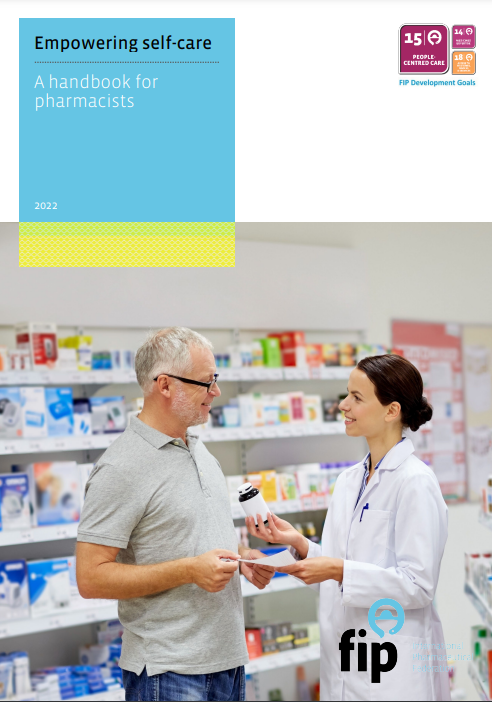
This handbook aims to provide the pharmacy workforce with relevant and concise guidance on coaching
practices and person-centred approaches to promoting and engaging in self-care. It discusses current trends
and strategies in self-care and explores the implications, innovations and approaches adopted across several
practice areas. It also aims to support and engage the frontline pharmacy workforce to overcome the barriers,
challenges and realities of self-care while exploring the extent of all its potential benefits, especially those
that contribute to the vision for UHC.
Cold, flu and sinusitis: Managing symptoms and supporting self-care. A handbook for pharmacists
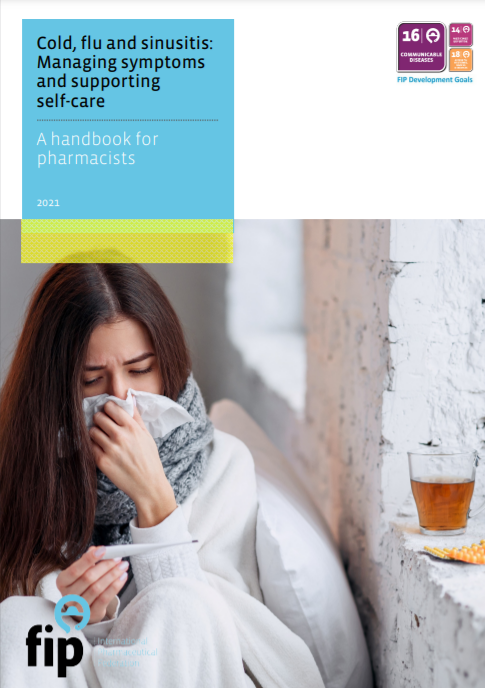
Pharmacists are embedded key players in the health landscape of their communities and are trusted for
patient-centred, comprehensive, timely advice. The accessibility of pharmacy means that the knowledge and
skills of community pharmacists are extensively sought by everyone from teenagers to new parents, to older
adults and everyone in between. This handbook will further strengthen their essential role within the
community to provide optimal patient care and support informed self-care.
This publication serves as a ready-to-use reference document covering different aspects of the management of
common URTIs in the community setting. Throughout the various sections, guidelines, algorithms and
summary tables, this handbook is meant to support pharmacists in promoting respiratory well-being,
developing a thorough understanding of commonly encountered URTIs, and navigating through both nonpharmacological and pharmacological management options.
Understanding and managing headaches in the community: Therapeutic approaches and advancements in the Southeast Asia region
Pain is a common symptom of a range of conditions or situations, and can manifest and be experienced with different intensities, from mild discomfort to highly incapacitating. A particular type of pain that often leads to consultations to pharmacists and the use of self-care medicines is headache. Relieving headaches and regaining mental clarity are important for patient wellbeing and productivity, and pharmacists can play a role in advising on the most appropriate strategies and therapeutic approaches that are suitable for each patient.
Understanding and managing headaches in the community: Therapeutic approaches and advancements in the Eastern Mediterranean Region
Pain is a common symptom of a range of conditions or situations, and can manifest and be experienced with different intensities, from mild discomfort to highly incapacitating. A particular type of pain that often leads to consultations to pharmacists and the use of self-care medicines is headache. Relieving headaches and regaining mental clarity are important for patient wellbeing and productivity, and pharmacists can play a role in advising on the most appropriate strategies and therapeutic approaches that are suitable for each patient.
